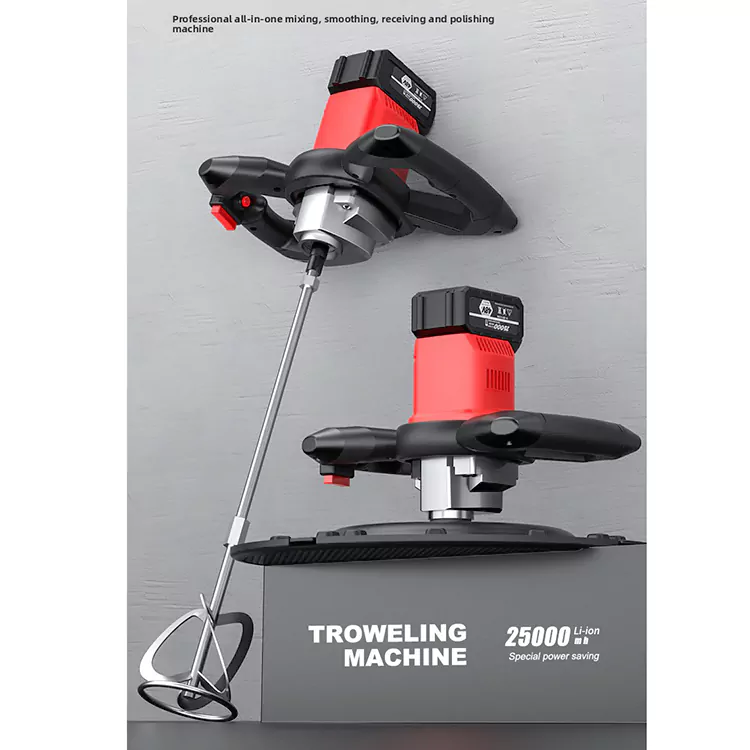
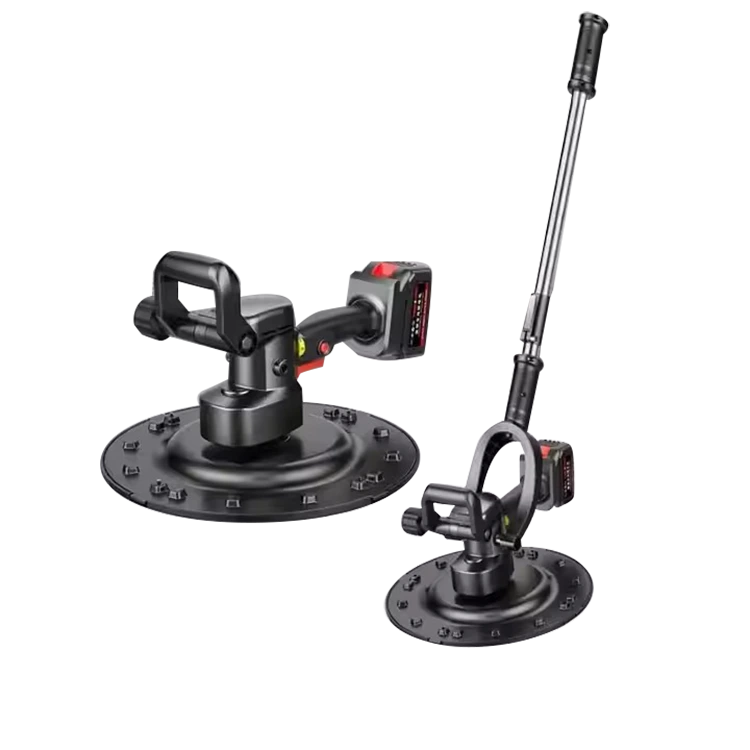
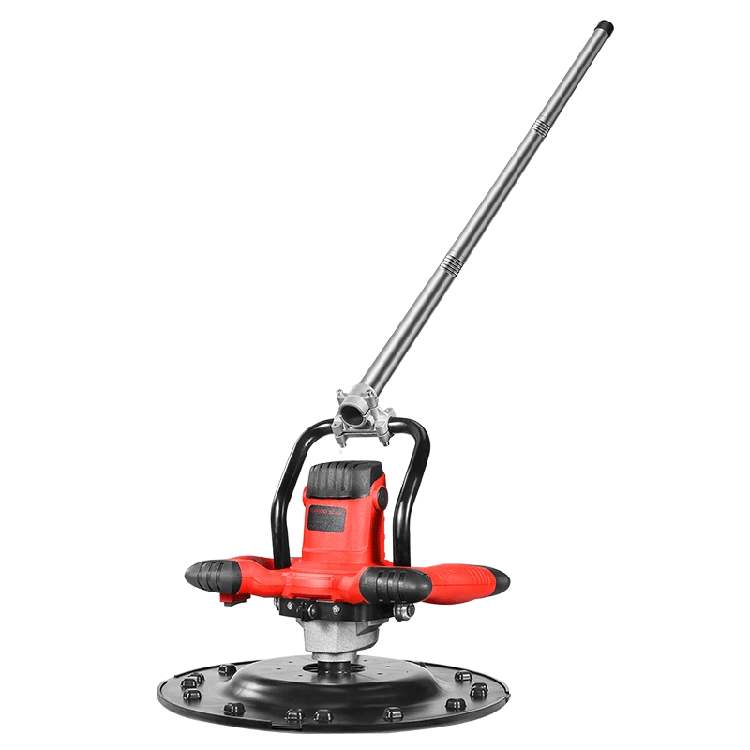
Achieving a smooth, consistent plaster finish requires suitable equipment, correct material timing, and controlled operation. Manual troweling can be demanding on large projects, while an unsuitable powered tool may create uneven marks, excessive vibration, or unnecessary rework. A cordless plastering electric trowel with a straight handle offers mobility and convenient access to working surfaces, making it worth considering for renovation teams, plastering contractors, and construction equipment distributors. This guide explains how these machines work, which specifications matter most, how to select the right finishing accessories, and how to maintain reliable performance. It also outlines practical supplier evaluation steps for buyers considering equipment from Yongkang Zhouxun Machinery Co., Ltd.

Wall finishing is an important stage in residential construction, commercial renovation, and interior refurbishment. Uneven surfaces can increase sanding requirements, delay painting, and create additional labor costs. For contractors working across multiple rooms or job sites, selecting a suitable finishing tool can make a meaningful difference to daily workflow.
A cordless plastering electric trowel is a powered tool designed to help spread, level, smooth, or finish compatible plastering materials using a rotating or otherwise powered working plate. Depending on the machine and attachment, it may be used for suitable cement-based plaster, mortar, putty, and other specified surface-finishing applications.
The straight-handle configuration provides a direct gripping position that allows the operator to guide the machine across the work surface. The cordless design removes the need for a continuously connected power cable during operation, which can be useful when moving between work areas or working where cable routing is inconvenient.
However, cordless does not mean unlimited operating time, and powered finishing does not eliminate the need for skilled workmanship. Surface preparation, material consistency, drying conditions, and the selected attachment remain essential to the final result.
Manual troweling gives experienced workers direct control, but repetitive movements can become demanding when large wall areas or multiple rooms need finishing. An appropriate powered tool can help reduce repetitive effort and support a more consistent working rhythm, although actual productivity depends on site conditions and operator experience.
Uneven pressure, inconsistent working speed, unsuitable accessories, and incorrect material timing can leave ridges or circular marks. A motorized trowel may help distribute working pressure more consistently when used correctly, but it cannot compensate for poorly prepared surfaces or unsuitable plaster mixtures.
Power cables can become inconvenient in occupied buildings, renovation projects, and areas with numerous obstacles. A battery-powered machine can improve freedom of movement, particularly when the operator needs to move between walls or work around doorways and temporary site equipment.
Holding a powered tool for extended periods requires attention to grip, balance, vibration, and total equipment weight. A straight handle may suit operators who prefer a direct grip, but comfort should be tested under realistic working conditions. A tool that feels manageable for a short demonstration may feel different after a full shift.
Different operators may apply different pressure or move at different speeds. Adjustable speed settings and a repeatable working method can help standardize the process. Training and agreed finishing criteria are still necessary to maintain quality across a team.
Different finishing stages may require different operating speeds. Lower settings can provide more controlled initial contact in suitable applications, while higher settings may be appropriate for certain finishing tasks when recommended by the manufacturer. Always begin with a conservative setting and adjust according to the material, attachment, and surface response.
The motor should provide stable output under the intended working load. Brushless motor systems, where fitted, can offer advantages in maintenance requirements and energy management compared with some traditional brushed designs. Actual performance depends on motor engineering, electronic controls, cooling, and operating conditions.
A larger plate may cover more surface per pass, while a smaller or more compact configuration may be easier to guide in restricted areas. Zhouxun's product information describes a widened plate of approximately 38 cm for the referenced model. Buyers should verify the exact diameter, compatible attachments, and intended application before ordering.
Battery capacity influences how long a tool can operate between charges, but runtime also depends on load, speed, battery condition, temperature, and the material being processed. Compare the battery voltage, amp-hour rating, charging time, replacement availability, and the possibility of purchasing a spare battery.
The straight handle should provide a secure grip and allow the operator to control the working plate without excessive wrist or shoulder strain. Assess the grip surface, switch position, total weight, vibration, and balance. Where possible, test the machine in a representative working posture before placing a large order.
Different plate materials and surface textures suit different finishing stages. Quick-change systems can simplify accessory replacement, but compatibility and secure attachment are essential. Confirm the mounting interface and the manufacturer's approved accessory list.
Without a trailing power cable, operators can move more freely between rooms and around temporary obstacles. This can simplify work on renovation sites where electrical outlets are limited or cable routing would interrupt the workflow.
A cordless tool can reduce dependence on extension cables and nearby outlets. The operator still needs to inspect the battery, attachment, work surface, and surrounding area before starting. Battery charging and storage also need to be included in the daily site plan.
Powered finishing may reduce some repetitive manual work and help crews maintain a steady process over suitable surfaces. The real benefit should be measured through actual project trials rather than assumed from advertised productivity figures. Surface size, material behavior, setup time, and operator proficiency all influence the outcome.
Depending on its approved configuration, a cordless plastering trowel may suit interior renovation, wall finishing, repair work, and other compatible applications. Contractors should confirm whether the machine is intended for wall surfaces, ceilings, floors, or a narrower set of tasks. Not every plastering tool is suitable for every surface or material.
The working plate affects contact with the surface and can influence the finish. Accessory selection should follow the material manufacturer's recommendations and the equipment supplier's instructions.
| Accessory Type | Potential Application | Important Consideration |
|---|---|---|
| Metal finishing plate | Suitable leveling, smoothing, or compacting stages | Confirm compatibility with the material and working stage |
| Hard plate | Selected applications requiring a firmer working surface | Avoid excessive pressure or use on unsuitable coatings |
| Sponge plate | Appropriate fine finishing or surface leveling tasks | Choose the correct texture and moisture conditions |
| Abrasive or sandpaper attachment | Compatible surface refinement or polishing tasks | Use only with an approved attachment and suitable material |
The table provides general guidance rather than a universal application specification. A sponge plate, metal plate, or abrasive attachment can behave differently depending on the plaster formulation, surface condition, and stage of curing. Consult the equipment instructions before changing accessories.
For contractors, keeping the correct accessories available can reduce unnecessary interruptions. For distributors, confirming which accessories are included in the standard package helps prevent quotation misunderstandings and supports more accurate product listings.
Check that the substrate is suitable for the plastering system being used. Remove loose particles, dust, and contaminants according to the project specification. Repair significant defects and apply any required primer or preparation layer before finishing.
Prepare and apply the plaster according to its manufacturer's instructions. Material consistency, layer thickness, ambient conditions, and working time can all influence the finishing window. Avoid using a trowel to compensate for material that has already hardened beyond its workable stage.
Confirm that the battery is charged, the working plate is securely attached, and the handle and controls are in good condition. Check for cracks, excessive wear, unusual looseness, or other visible defects. Do not operate a damaged tool.
Select a suitable initial setting based on the manufacturer's guidance. Start the machine as instructed and bring the working plate into contact with the surface in a controlled manner. Avoid sudden movements or excessive pressure that could damage the finish.
Move the trowel smoothly and use a consistent pattern across the work area. Monitor the surface for ridges, uneven texture, excessive material movement, or other signs that the speed or attachment may be unsuitable. Adjust the method instead of repeatedly working an area that is becoming damaged.
Check the surface under suitable lighting and compare it with the project's acceptance requirements. Complete any necessary touch-ups using the recommended method. Clean the tool and accessories after use according to the manufacturer's instructions.
Electric and manual tools serve different needs. A professional team may use both depending on the job size, material, access, and required finish.
| Evaluation Factor | Cordless Electric Trowel | Manual Trowel |
|---|---|---|
| Power source | Rechargeable battery | Manual operation |
| Movement | No trailing power cable | No electrical connection required |
| Operator effort | Motor assists the working motion | Relies on operator-applied effort |
| Control | Requires speed and contact management | Direct hand control and tactile feedback |
| Maintenance | Battery, motor, plate, and controls need care | Generally simpler cleaning and inspection |
| Best fit | Suitable repetitive finishing tasks and larger work areas | Small repairs, detail work, and selected finishing stages |
A powered tool may be valuable when repetitive work and mobility are important, while a manual trowel remains useful for corners, narrow areas, and detailed corrections. The most practical solution is often to match the tool to the task instead of expecting one machine to handle every finishing requirement.
Identify the materials, surface types, project sizes, and finishing stages that the machine must handle. A tool intended for putty finishing may have different requirements from equipment designed for a particular cement-based plaster system.
The purchase price is only one part of the cost. Buyers should also account for spare batteries, replacement plates, consumables, maintenance, shipping, and expected service life. For contractors, compare these expenses against actual labor savings under representative working conditions.
Where practical, test the machine on the intended material and surface. Evaluate handling, finish quality, battery performance, accessory changes, and cleaning requirements. A sample order can also help distributors understand packaging and product consistency before stocking inventory.
International buyers should clarify the battery shipping arrangements, charger and plug configuration, voltage compatibility where relevant, user manual language, labeling, and applicable destination-market requirements. Request the relevant conformity documents and verify that they apply to the specific model being purchased.
Remove plaster residue before it hardens, following the manufacturer's cleaning instructions. Keep material away from switches, motor openings, battery contacts, and other areas that must remain clean. Do not immerse the machine or use water near electrical components unless the instructions explicitly permit it.
Check plates, fasteners, and attachment interfaces for wear or damage. Replace defective components with compatible parts. An uneven or loose attachment can affect the finish and may create a safety risk.
Use the specified charger and follow the recommended charging, storage, and temperature conditions. Protect battery contacts from metal debris and moisture. Do not use a swollen, damaged, or overheating battery. Battery storage and transport should follow the supplier's instructions and applicable local requirements.
Regular inspection, correct storage, and appropriate accessory replacement can reduce avoidable downtime. Always prioritize the manufacturer's operating instructions and the site's safety procedures.
For importers, wholesalers, and construction equipment distributors, a reliable manufacturing partner contributes to product consistency, predictable supply, and effective after-sales support. Evaluating these factors before placing an order can help reduce purchasing risk.
Ask for a model-specific specification sheet, available test reports, inspection procedures, and details of the standard package. Check that advertised motor, battery, speed, and accessory specifications match the product offered in the quotation.
If you need private labeling, customized packaging, or market-specific accessories, confirm the available options and minimum order quantities. Request written details of artwork approval, sample costs, production schedules, and any additional charges.
Ask which components are covered by the warranty, how service claims are handled, and whether replacement batteries, chargers, plates, and other wear parts can be supplied. Clear after-sales arrangements are particularly important for distributors serving professional users.
Confirm lead time, packaging dimensions, shipment method, payment terms, and the documentation supplied with the order. For overseas procurement, clarify responsibility for battery transport requirements and any relevant export documents before shipment.
Yongkang Zhouxun Machinery Co., Ltd. offers construction tools including electric plastering trowels and related equipment. Buyers can review the company's product range and discuss model specifications, available configurations, accessories, and wholesale requirements before making a purchasing decision.
To explore the product directly, visit the Cordless Plastering Electric Trowel with Straight Handle product page. Confirm the current model configuration, battery details, included accessories, warranty, and delivery terms with the supplier before ordering.
It is a powered surface-finishing tool designed to help smooth, level, or finish compatible plastering materials. The exact applications depend on the machine model, working plate, material, and manufacturer's instructions.
A straight handle provides a direct gripping arrangement that some operators find convenient for guiding the machine. Actual comfort and control depend on the tool's balance, weight, grip design, working position, and individual preference.
Runtime varies with battery capacity, speed setting, working load, temperature, battery condition, and material. Ask the manufacturer for model-specific runtime information and test the tool under conditions similar to your intended application.
No. Compatibility depends on the material formulation, application stage, surface, and approved attachment. Confirm the intended use with both the plaster manufacturer and the tool supplier before operation.
The appropriate diameter depends on surface size, access restrictions, operator control, and the required finish. A larger plate may cover more area per pass, while a smaller plate may be easier to handle in confined locations. Confirm the available sizes and model specifications.
Prepare the substrate correctly, use a suitable material consistency, select the appropriate attachment, begin at a controlled speed, and maintain consistent movement. Test a small area first and follow the material manufacturer's recommended finishing window.
Confirm specifications, sample quality, battery and charger configuration, accessory compatibility, minimum order quantity, packaging, lead time, warranty, spare parts availability, and applicable export or destination-market requirements.
Availability depends on the supplier, model, and order requirements. Contact Yongkang Zhouxun Machinery Co., Ltd. to confirm sample arrangements, customization options, minimum quantities, and associated costs.
Clean the tool after use according to its instructions, inspect the working plate and attachment points, maintain the battery correctly, and replace damaged components. Never clean or service moving parts while the tool is running.
Improve your construction equipment offering with practical plastering tools designed around real job-site requirements. Yongkang Zhouxun Machinery Co., Ltd. welcomes inquiries from contractors, importers, wholesalers, and distributors seeking product information and purchasing support.
Contact the team to discuss model specifications, battery configurations, finishing accessories, sample availability, wholesale quantities, and delivery requirements for your market.
Contact Us for Product DetailsConfirm the latest specifications, quotation, warranty, and delivery arrangements directly with the supplier.